
The Most Popular AI Search Engines in Japan 2026
Generative AI is changing how people search for information in Japan. Building on our previous article about the most popular search engines in Japan, this article looks at which AI platforms are most popular in Japan, how widely AI is being adopted, and how search behavior is changing. It also explains the impact of AI Overviews and what these trends mean for businesses and marketers in the Japanese market.
Which AI search engine is the most popular in Japan?
ChatGPT is the most popular AI search platform in Japan, followed by Gemini and Copilot.
According to a survey by the Japan Research Center, among active generative AI users in Japan, ChatGPT has the highest usage rate at 37%. It is followed by Gemini at 30% and Copilot at 17%. Usage of Claude and Perplexity is less than 4%.
ChatGPT has a dominant presence in Japan’s generative AI market. Its main use cases are writing text, followed by information search, text summarization, and translation. Another unique feature in Japan is that ChatGPT is popularly known by the nickname “Chappie.” In 2025, “Chappie” was even nominated for Japan’s annual Buzzword of the Year award. This cultural visibility shows how widely ChatGPT has spread in Japanese society.
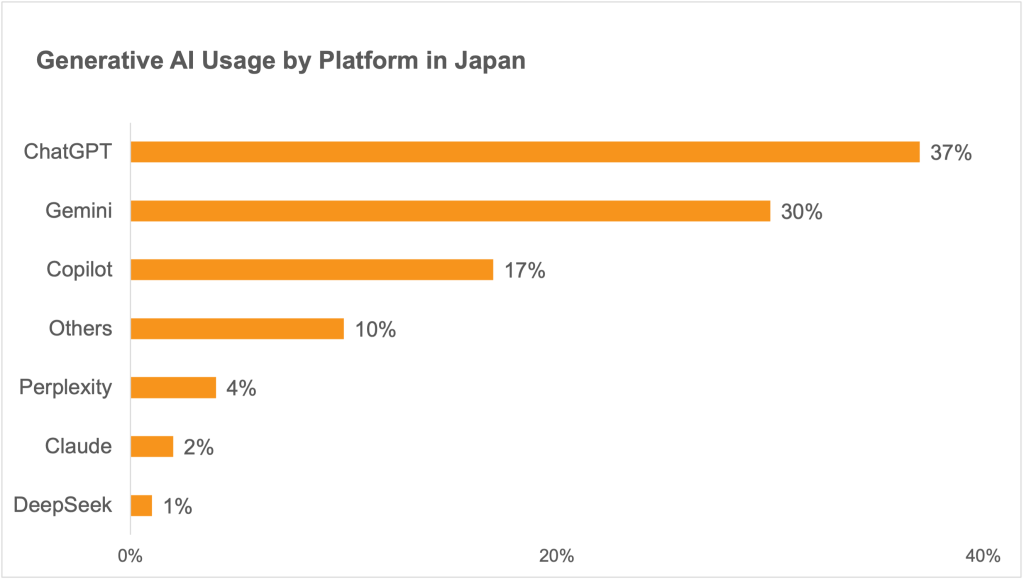
Source: Japan Research Center survey data (December 2025)
This cultural integration is why we see such high brand awareness, but the data tells a deeper story about shifting preferences. Looking at broader adoption tracking, ChatGPT’s adoption rate has stayed flat since the second half of 2025, while Gemini’s usage has continued to rise since early 2025. In the latest survey by the Japan Research Center, Gemini’s usage rate reached 23%, compared with 31% for ChatGPT. The gap has narrowed. This momentum may be partly driven by Gemini’s deep integration into the Google ecosystem, which offers a more frictionless experience for users.
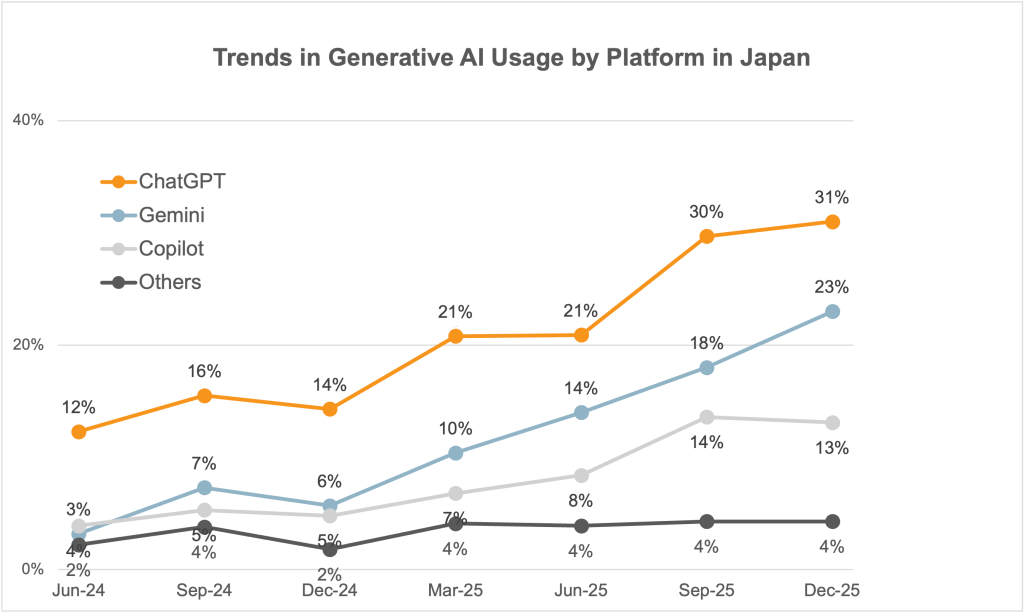
Source: Japan Research Center survey data (December 2025)
Search volume data shows a similar pattern. ChatGPT still has by far the highest search volume in Japan, while Gemini’s search volume kept growing throughout 2025. These trends suggest that Gemini may eventually overtake ChatGPT.
 Source: Google AdWords Source: Google AdWords |
 Source: Google AdWords Source: Google AdWords |
This isn’t just a local phenomenon. According to Similarweb, Gemini’s global traffic share has been increasing month by month, a broader trend that Japan is already beginning to mirror.
At the local level, Gemini has launched large-scale advertising campaigns in Japan, including TV commercials, collaborations with celebrities and YouTubers, and promotions focused on its image generation features. As a result, Gemini is expected to expand further, especially among younger users.
Which AI search engine is the most popular in Japan?
ChatGPT is the most popular AI search platform in Japan, followed by Gemini and Copilot.
According to a survey by the Japan Research Center, among active generative AI users in Japan, ChatGPT has the highest usage rate at 37%. It is followed by Gemini at 30% and Copilot at 17%. Usage of Claude and Perplexity is less than 4%.
ChatGPT has a dominant presence in Japan’s generative AI market. Its main use cases are writing text, followed by information search, text summarization, and translation. Another unique feature in Japan is that ChatGPT is popularly known by the nickname “Chappie.” In 2025, “Chappie” was even nominated for Japan’s annual Buzzword of the Year award. This cultural visibility shows how widely ChatGPT has spread in Japanese society.
Source: Japan Research Center survey data (December 2025)
This cultural integration is why we see such high brand awareness, but the data tells a deeper story about shifting preferences. Looking at broader adoption tracking, ChatGPT’s adoption rate has stayed flat since the second half of 2025, while Gemini’s usage has continued to rise since early 2025. In the latest survey by the Japan Research Center, Gemini’s usage rate reached 23%, compared with 31% for ChatGPT. The gap has narrowed. This momentum may be partly driven by Gemini’s deep integration into the Google ecosystem, which offers a more frictionless experience for users.
Source: Japan Research Center survey data (December 2025)
Search volume data shows a similar pattern. ChatGPT still has by far the highest search volume in Japan, while Gemini’s search volume kept growing throughout 2025. These trends suggest that Gemini may eventually overtake ChatGPT.
Source: Google AdWords
Source: Google AdWords
This isn’t just a local phenomenon. According to Similarweb, Gemini’s global traffic share has been increasing month by month, a broader trend that Japan is already beginning to mirror.
At the local level, Gemini has launched large-scale advertising campaigns in Japan, including TV commercials, collaborations with celebrities and YouTubers, and promotions focused on its image generation features. As a result, Gemini is expected to expand further, especially among younger users.
As more people in Japan start using AI tools to find information, understanding how your brand shows up across these experiences can be difficult.
We can help you assess your visibility and identify where there may be gaps or opportunities.
As more people in Japan start using AI tools to find information, understanding how your brand shows up across these experiences can be difficult. We can help you assess your visibility and identify where there may be gaps or opportunities.
how quickly is Generative AI being adopted in Japan
In December 2024, the generative AI adoption rate in Japan was 19%. By December 2025, it had more than doubled, reaching 45%, highlighting the rapid acceleration of generative AI usage across the country.
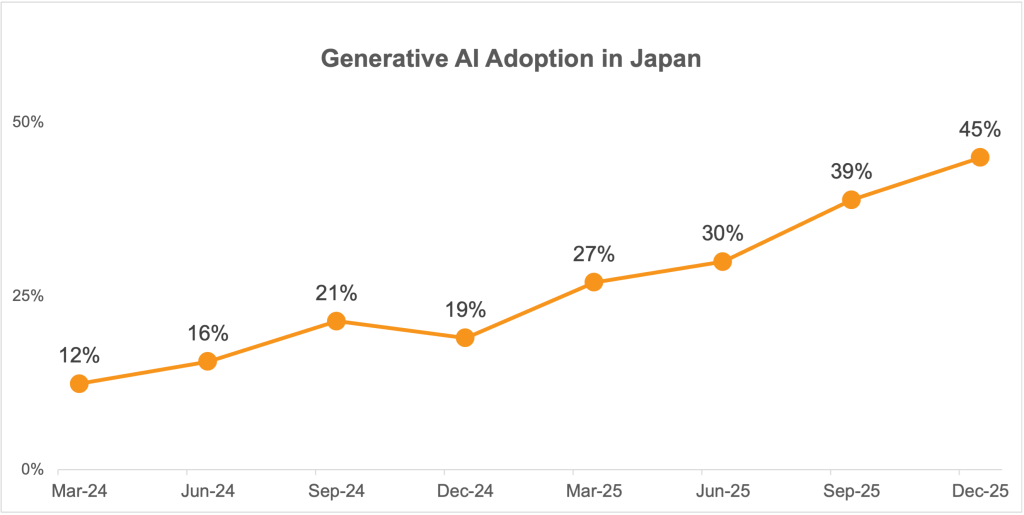
Source: Japan Research Center survey data (December 2025)
But there is a fascinating gap between personal use and the workplace. While individuals are quick to experiment, Japanese corporations are moving with more traditional caution, lagging behind other countries. A survey conducted by BCG among working professionals shows that Japan’s usage rate is 51%, significantly lower than the global average of 72%.
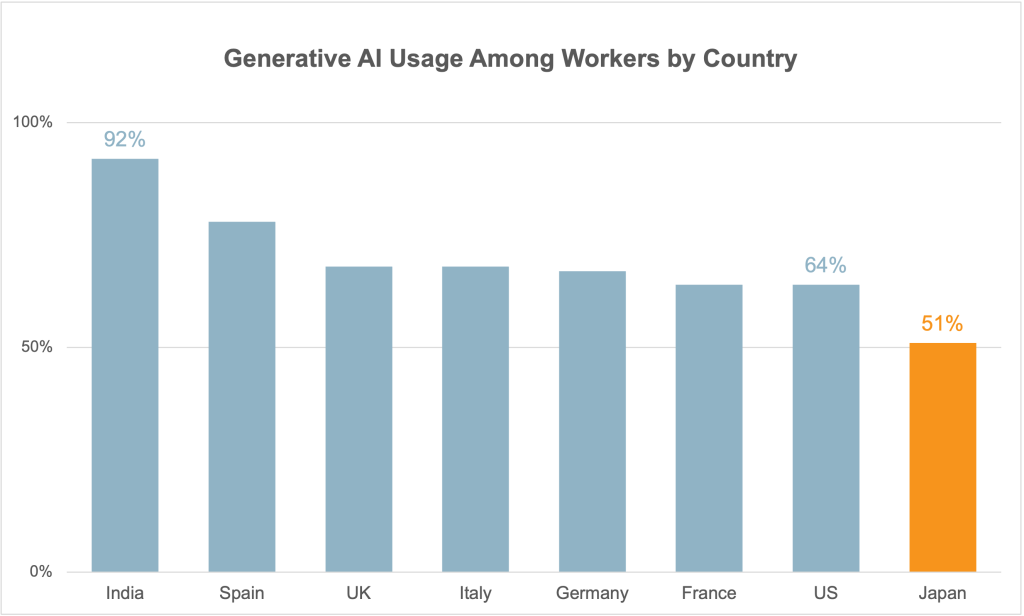
Source: Boston Consulting Group survey data (July 2025)
Japan has generally been seen as having lower adoption of generative AI among both individuals and companies compared with other countries. However, recent data shows rapid growth. This suggests that Japan’s market also has strong potential for a major increase in generative AI adoption in the near future.
As for why adoption has been relatively slow, a survey by Japan’s Ministry of Internal Affairs and Communications found that the top concern about introducing generative AI is “not knowing how to use it effectively.” Other major concerns include “security risks such as internal data leaks,” “ongoing costs,” and “initial implementation costs.”
While companies understand and expect benefits such as improved efficiency and solutions to labor shortages, they also focus strongly on negative aspects such as security and cost. In general, Japanese consumers and businesses tend to prioritize safety and reliability, which has kept adoption at a relatively low level compared with other countries. However, given the recent rapid growth, this structure may begin to change.
How is AI changing search behavior in Japan?
As a company providing SEO and paid search services, The Egg pays close attention to how the growing use of generative AI is affecting search behavior.
As shown earlier, generative AI usage in Japan is increasing, with ChatGPT being the most widely used platform. But does this mean people are also relying heavily on generative AI for everyday search?
Domestic research shows that only 31% of users rely on generative AI for daily search activities, while 91% still use traditional search engines such as Google and Yahoo. Traditional search engines remain the core of search behavior, although many people use both search engines and generative AI together.
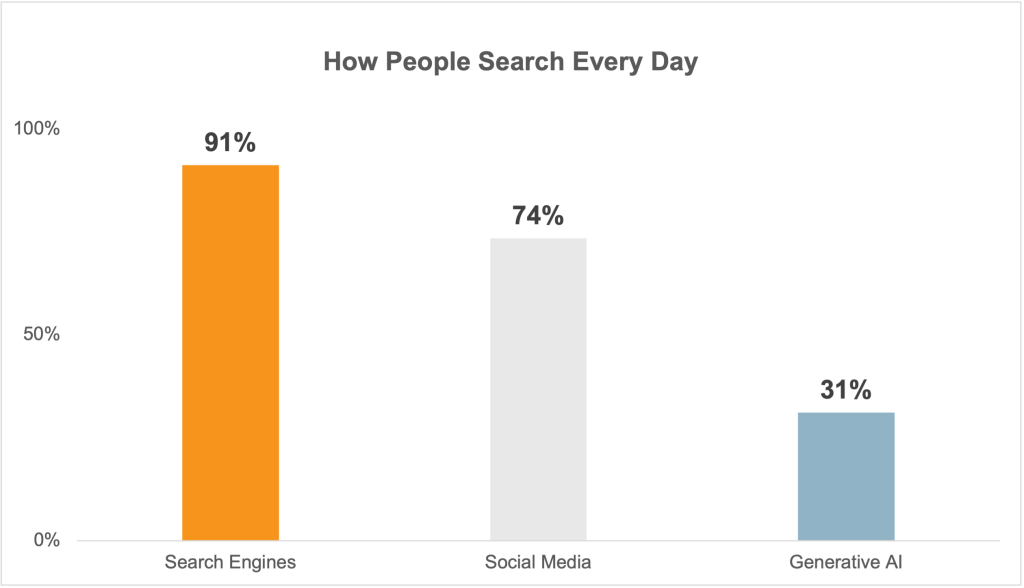
Source: CyberAgent survey data (December 2025)
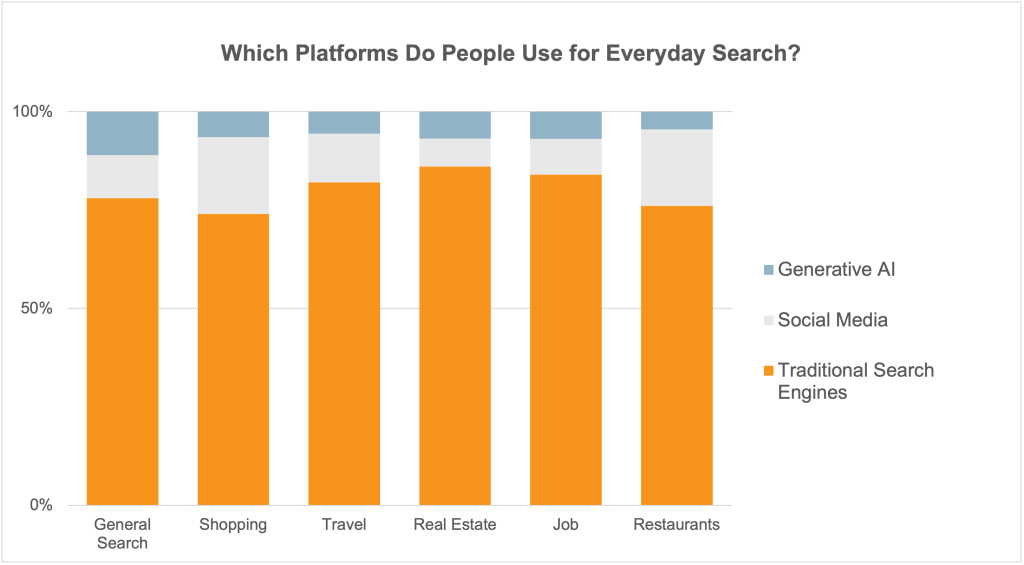
Source: CyberAgent survey data (December 2025)
When looking at different search scenarios, generative AI is used most often for everyday informational searches. In other categories, however, traditional search engines remain dominant, and in some areas the use of generative AI is still limited. These findings show that while AI-based search is clearly expanding, traditional search engines are still used far more frequently overall. Therefore, continuing SEO efforts is likely to remain effective in the short term.
As search becomes more conversational, it is not always clear whether your current content matches the way people are now asking questions.
We can help you to make sure it reflects these changes.
As search becomes more conversational, it is not always clear whether your current content matches the way people are now asking questions. We can help you to make sure it reflects these changes.
How are AI Overviews and AI Mode affecting search in Japan?
Although traditional search engines are still widely used, how are AI Overviews (AIO) and AI Mode affecting search in Japan? Unlike many other countries where Google dominates, Japan has a relatively high share for Yahoo as well.
The differences between Google and Yahoo are discussed in Most Popular Search Engines in Japan, but here we focus on their AI features. In Japan, Yahoo also offers AI functions similar to Google’s.
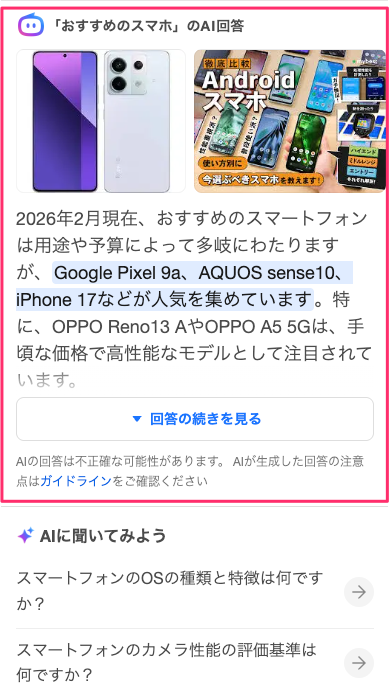
Yahoo’s AI Overview feature

Google’s AI Overview feature
The feature equivalent to Google’s “AI Mode” is called “AI Assistant” on Yahoo. On Yahoo, options such as “Ask AI Assistant” appear alongside suggested queries and related questions, allowing users to access the AI Assistant directly from these areas. Compared to Google, Yahoo provides more entry points to its AI Assistant, making it feel more prominently integrated into the search experience.
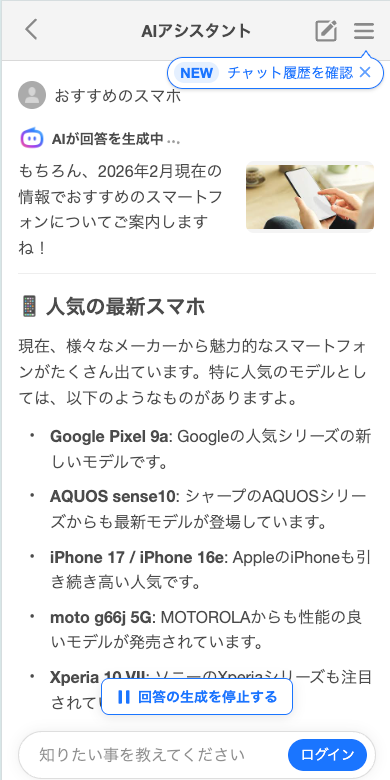
Yahoo’s AI Assistant offers functionality similar to Google’s AI Mode
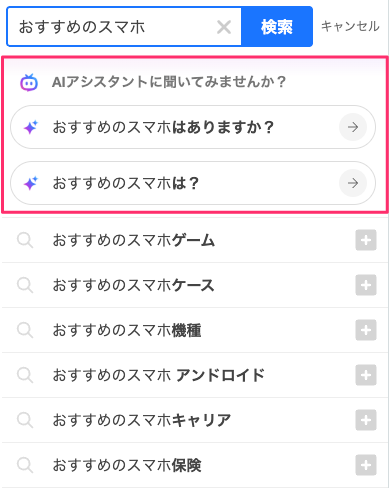
Yahoo displays AI-related suggested search terms
As AI features have been strengthened on both Google and Yahoo, users now encounter AI-generated search results on a daily basis, regardless of which search engine they use.
What is the impact of AI Overviews in Japan?
The global trend of “zero-click searches” is also evident in Japan. A Japanese survey found that when AIO appears in search results, 63% of users say they sometimes end their search without clicking any links.
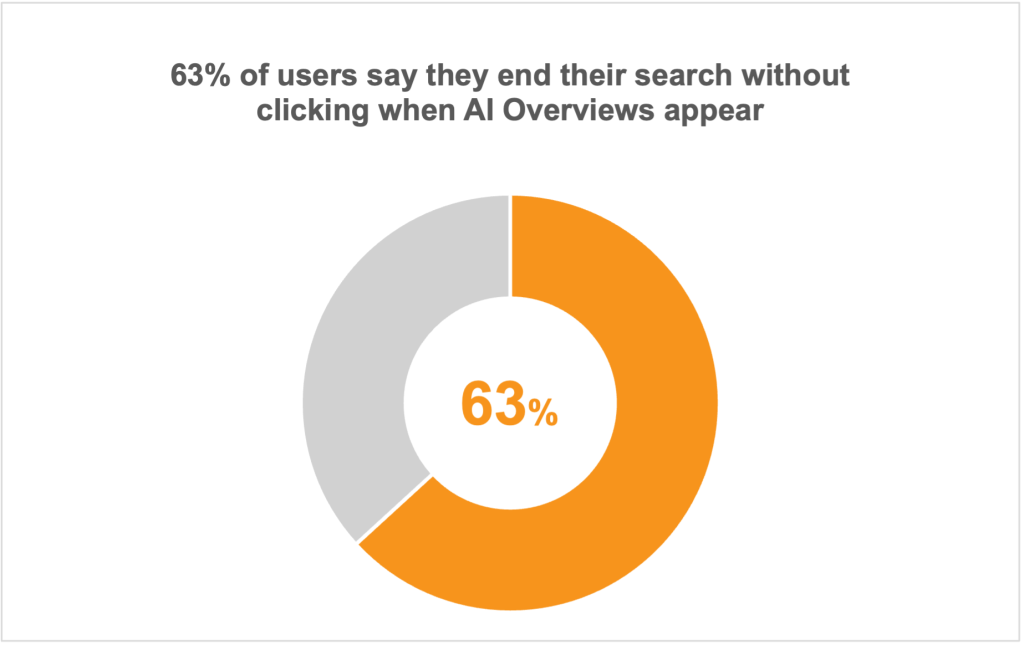
Source: CyberAgent survey data (December 2025)
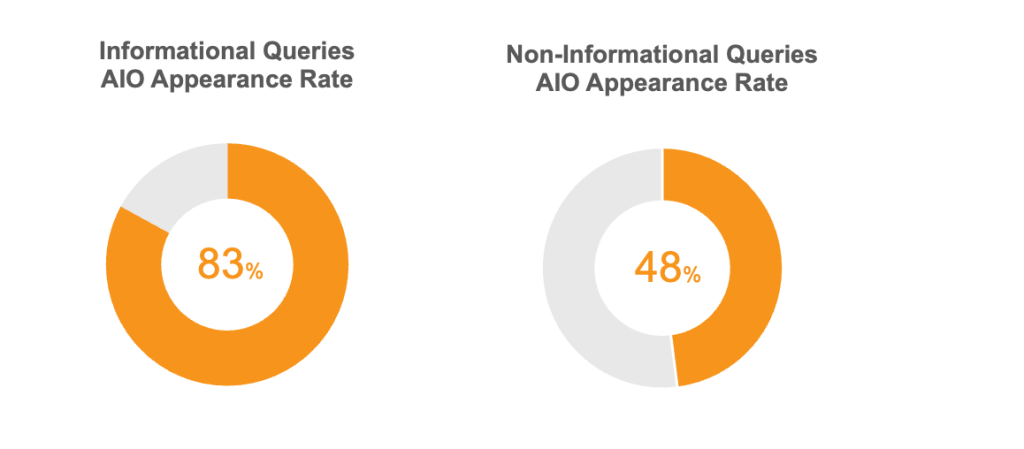
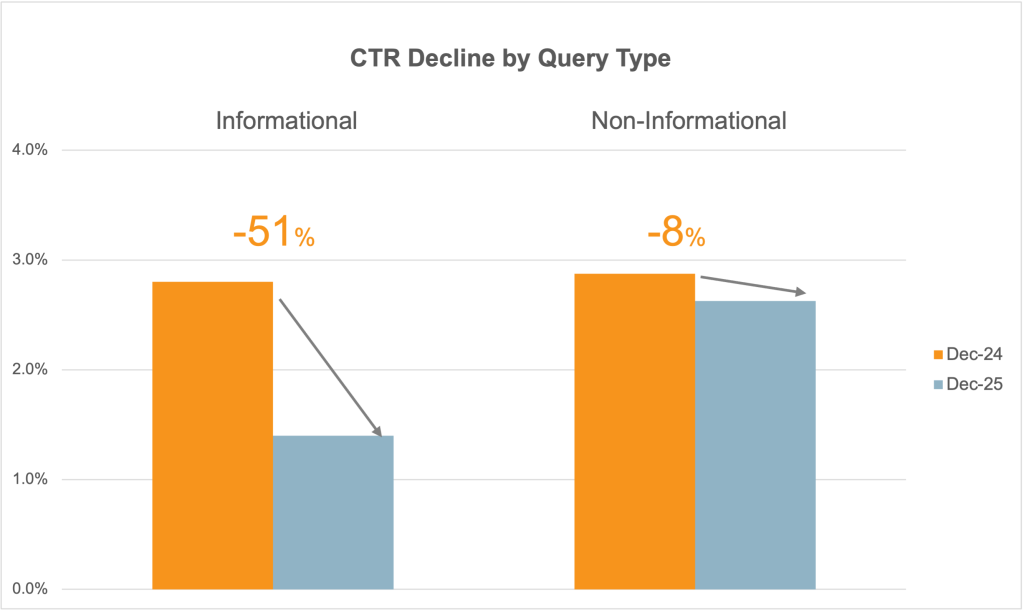
This zero-click trend isn’t just theoretical; we are seeing it reflected in real-time performance. For instance, across the accounts we manage at The Egg, we’ve observed that CTR has shifted significantly—but the impact isn’t the same for everyone.
While CTR in Japan has fallen by roughly half since the spread of AIO, this decline does not occur equally across all queries. The largest drops are seen in informational queries. In contrast, for navigational and commercial queries that are directly linked to revenue and leads, AIO appears less often and CTR remains relatively high.
Source: Data collected by The Egg
Source: Data collected by The Egg
What businesses need to focus on now is not simply recovering lost traffic. The key is to concentrate strategically on keywords and traffic that lead to real business outcomes. In the AIO era, it is no longer effective to chase every possible search visit. Instead, companies must shift to SEO strategies that prioritize areas with high profitability and business impact.
What does the future of SEO strategy in Japan look like?
Many businesses are concerned about how AI will affect their SEO performance and what actions they should take. However, based on real client cases, the impact of AI differs widely depending on the website and the business model. There is no single, universal approach that works for everyone.
For some companies, AI-driven optimization will become a priority. For others, traditional SEO will remain the more effective investment.
If you would like a clearer understanding of how AI is influencing your website today, please feel free to contact us.
At The Egg, we develop tailored strategies for each individual site based on detailed analysis and real-world data. Our approach typically includes:
Assessing Your Current Position
We analyze the situation from multiple perspectives, including traffic from LLMs, brand mentions in AI-generated answers, and the appearance rate of AI Overviews, as well as their impact on key business metrics such as conversions and revenue. Rather than relying on a single metric, we take a holistic view of how AI is affecting your overall performance.
Prompt Research and Tool Selection
We conduct prompt research that reflects industry-specific characteristics and local market behavior. Where existing tools are not sufficient to capture the data required for GEO (Generative Engine Optimization) initiatives, we recommend and implement more suitable tools to ensure accurate measurement and decision-making.
Optimization Strategy and Ongoing Monitoring
We design content and on-site optimization strategies that increase the likelihood of your brand being cited in generative AI results and AI Overviews. Performance is then monitored on a monthly basis, and strategies are refined continuously to ensure sustained improvement.
The way your brand appears in AI search can vary depending on the topic, query, or industry.
We can help you look at what this means for your sector and where the biggest opportunities may be.
The way your brand appears in AI search can vary depending on the topic, query, or industry. We can help you look at what this means for your sector and where the biggest opportunities may be.
Key Takeaways
Just because AI is dominating the conversation does not mean businesses should rush into major investments or drastic changes.
Before making any big decisions, it is essential to first understand your current situation and carefully assess what your business truly needs. Only then can you determine which actions will deliver real value, rather than simply reacting to industry trends.
Reference data
CyberAgent (December 2025): Survey on AIO usage
CyberAgent (December 2025): Survey on Generative AI usage
Japan Research Center (December 2025): Daily generative AI tracking
Boston Consulting Group (July 2025): Corporate use of generative AI
Ministry of Internal Affairs and Communications (2025): Trends in the rapid development of AI